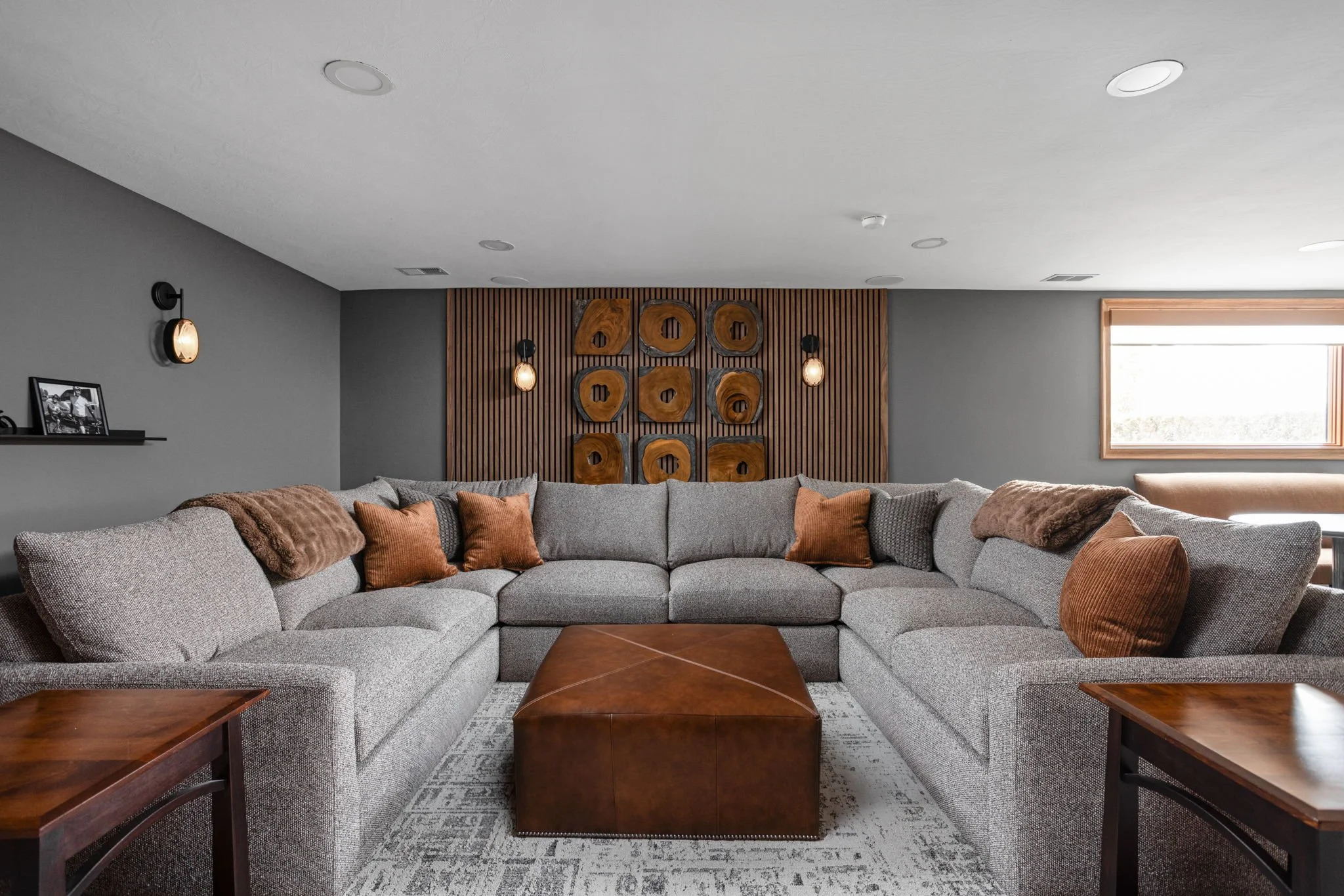
Clients often describe a room as feeling wrong without being able to say why. Nine times in ten it is not colour or style. It is scale: the relationship between the size of things and the size of the space holding them.
Furniture that fits the room, not the showroom
Showrooms have enormous ceilings and no walls, which flatters oversized pieces. Measure your room, tape the footprint on the floor, and live with the outline for a few days before committing.
Hang art at the right height and size
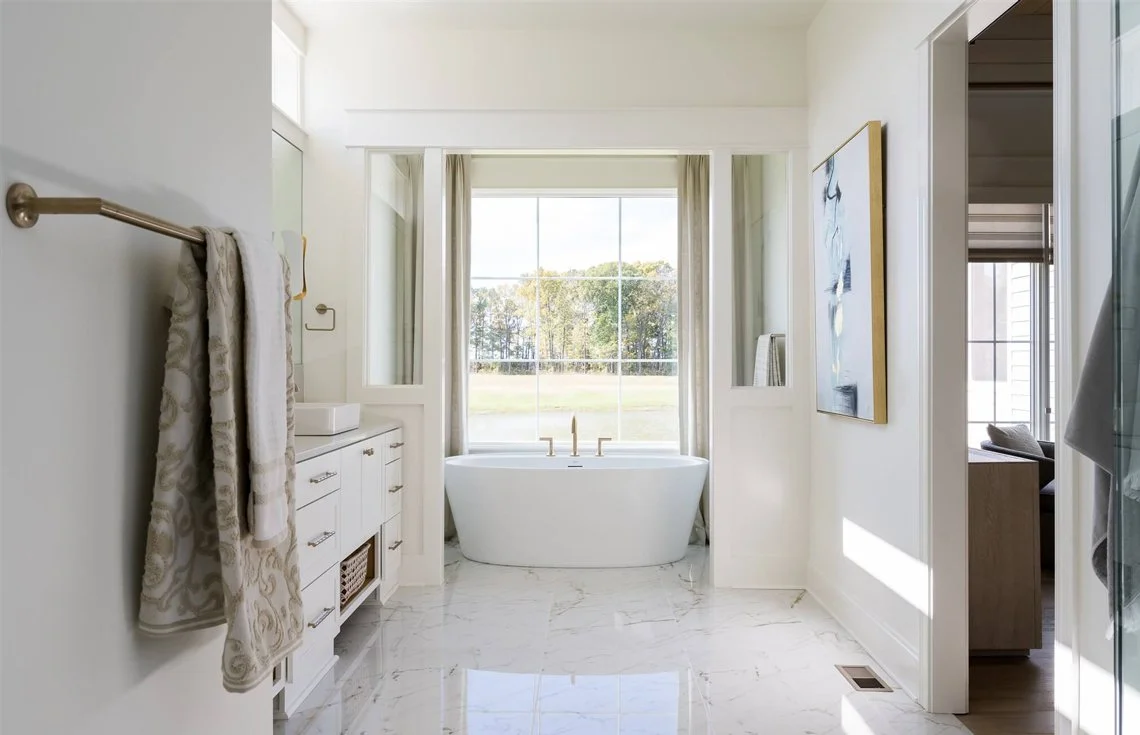
Art centred at roughly eye level, around fifty-seven inches, reads correctly in most rooms. Above furniture, a piece wants to be about two thirds the width of what sits beneath it. A small picture floating on a large wall is the most common error we see.
Vary the heights
A room in which everything stops at the same level feels flat. Something tall in at least one corner, a mirror, a plant, a lamp, gives the eye somewhere to travel.
Rugs are almost always too small
The front legs of the seating should sit on the rug at minimum. A rug that floats in the centre of a seating group makes the whole arrangement look adrift.
None of these are rigid rules, but they are reliable starting points, and breaking them works far better when it is a decision rather than an accident.