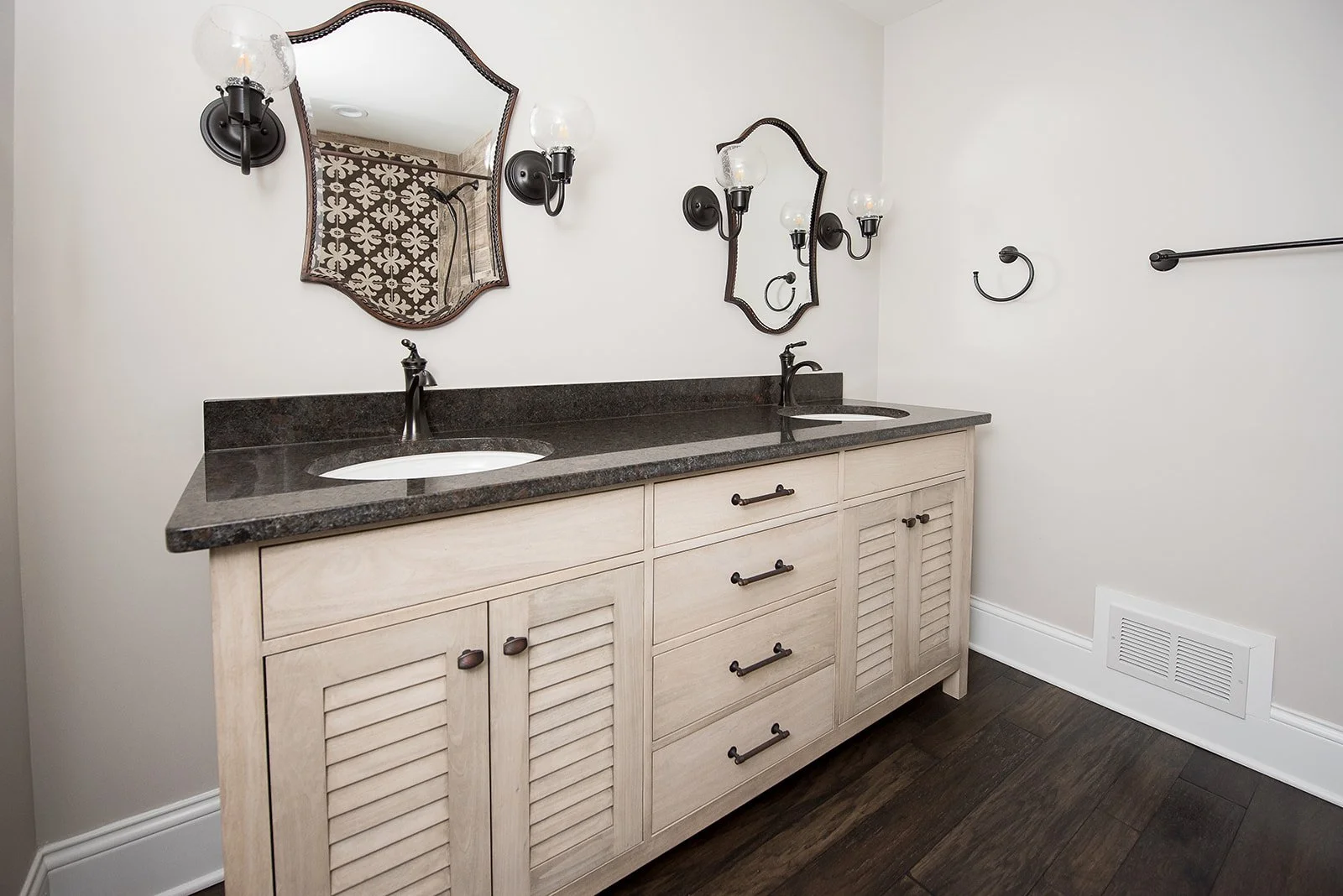
Bathroom budgets vary more than almost any other room, and the reasons are structural rather than decorative. Understanding what actually drives the figure makes the conversation with any designer far more productive.
The things that move the number most
Whether the plumbing stays where it is. Relocating a toilet or a shower drain means opening the floor, and in a two-storey house that means opening a ceiling too. Room size matters less than the number of wet fixtures. And custom millwork, stone, and anything imported will set the lead times that shape the schedule.
What rarely moves it as much as people expect
Tile choice, within reason. Paint. Hardware. These are visible, so they feel decisive, but they are usually a modest fraction of the total against the trades and the fixtures.
Where to spend and where to hold back
Spend on the things that are difficult or destructive to change later: layout, waterproofing, ventilation, the vanity, and the shower valve. Hold back on the things that can be swapped in an afternoon, such as mirrors, lighting fixtures and accessories.
Get a real estimate, not a range
Any firm can quote you a range. What is useful is a detailed estimate against a finished design, with selections made and lead times known. That is the point at which the number becomes something you can plan around.